Ward's own machine, and very different from the 2003-2009 work on his other cards. Three coils are driven by three bridges switched in sync and phase-shifted 120° apart. He credits the idea to a photograph of three SSTCs by Duane Bylund, and says it follows from his day job on multi-phase motors and inverters. The electronics are modern and published in full as three Altium sheets. One STM32F405 runs everything. Each phase gets its own current-transformer input and thermistor, and leaves on its own ten-pin header carrying PWM, inverted PWM and a disable line. A fourth header serves the power-factor stage, and a MAX9201 comparator gives mains sync. Each phase board is a SiC half bridge, an Si8231 isolator into two NCP81074 drivers into a pair of C3M0021120K 1200 V devices. The front end is an SiC boost PFC with an ACS770 current sensor and a thyristor-triggered inrush path. The boost sheet also carries a warning in his own hand, left in the published drawing: “IC1, ISO721 is a BAD CHOICE, i hacked the board to use the Si8271 instead. The ISO721 leaves its output HI if the input voltage is not present! This will inadvertently destroy the PFC boost fet!!!”
Schematics and photos
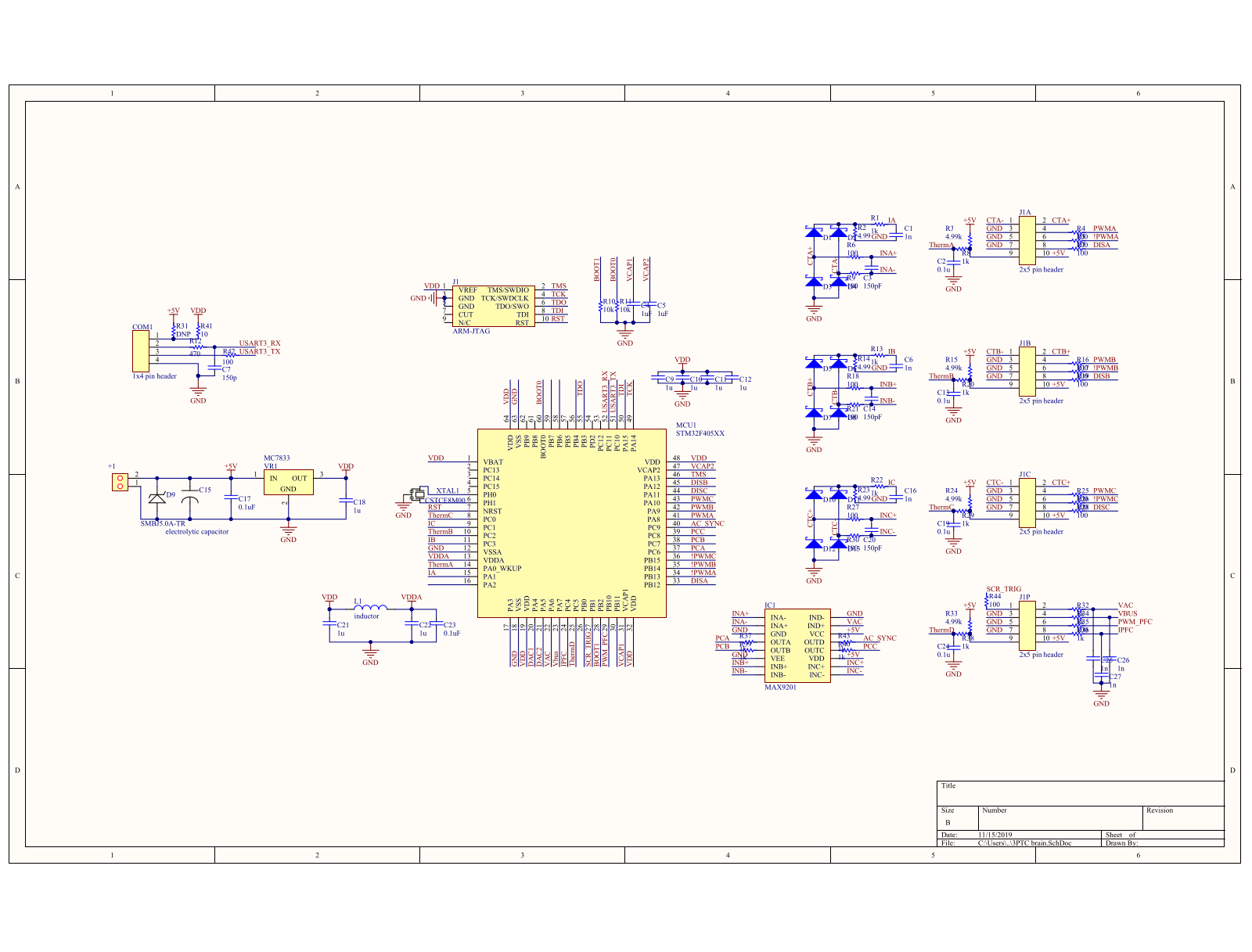
schematic: “3PTC brain”: STM32F405, three phase channels, mains sync (Altium, 15 Nov 2019) 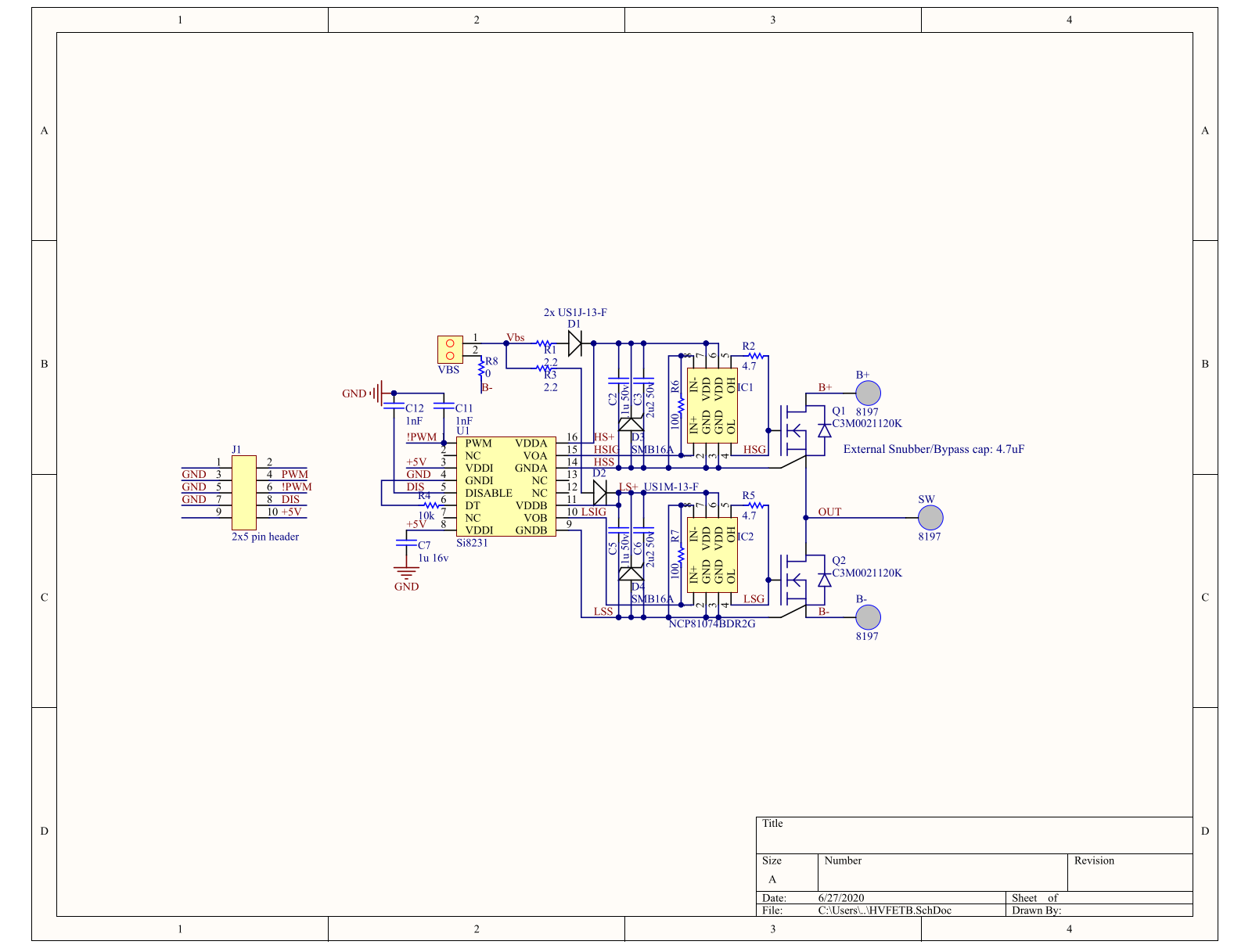
schematic: phase half bridge: Si8231 into NCP81074 into C3M0021120K SiC (27 Jun 2020) 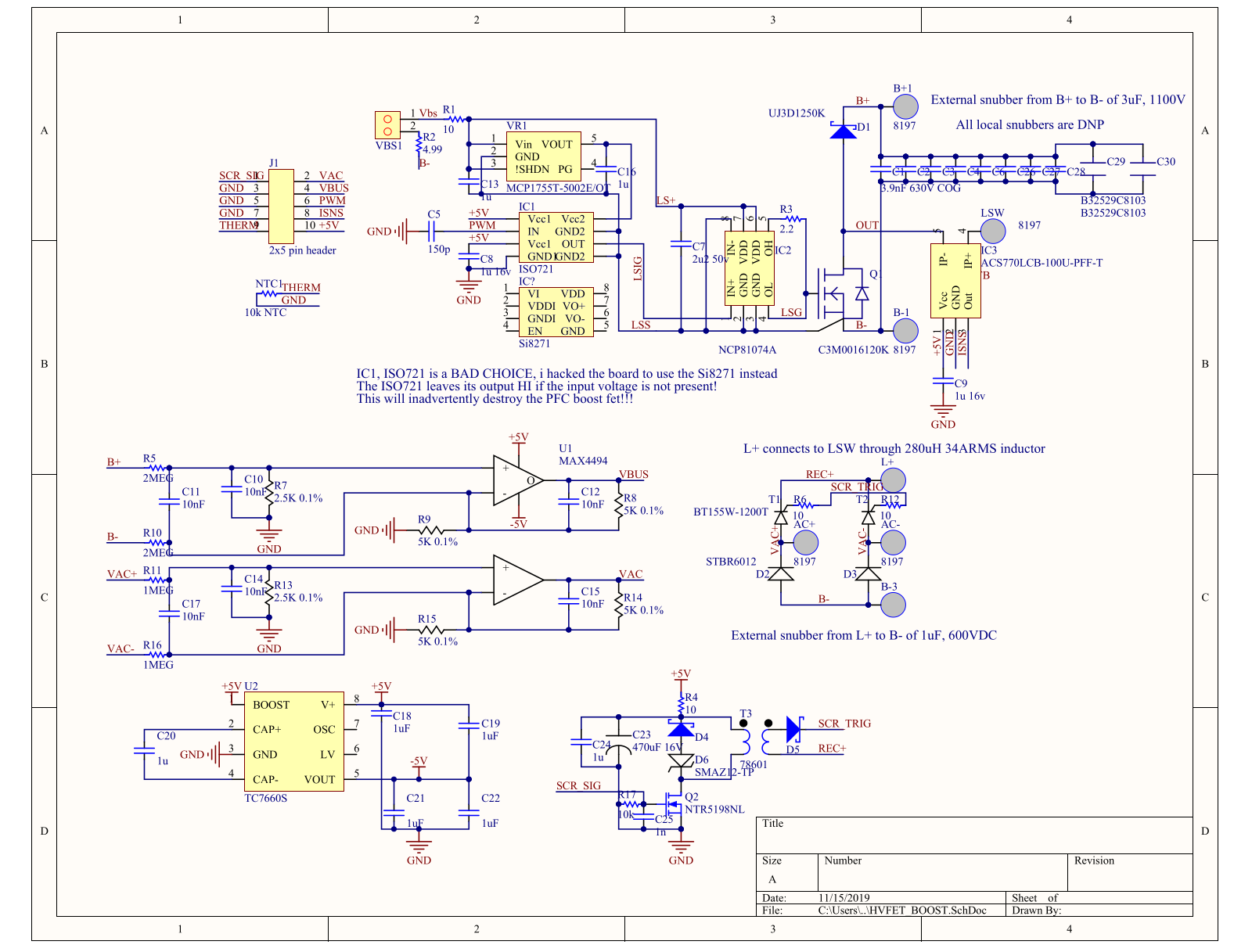
schematic: SiC boost PFC, with his own warning about the ISO721
Sources
This is the card from the driver tree, written from what the builder published. Send corrections through the forum.